
-
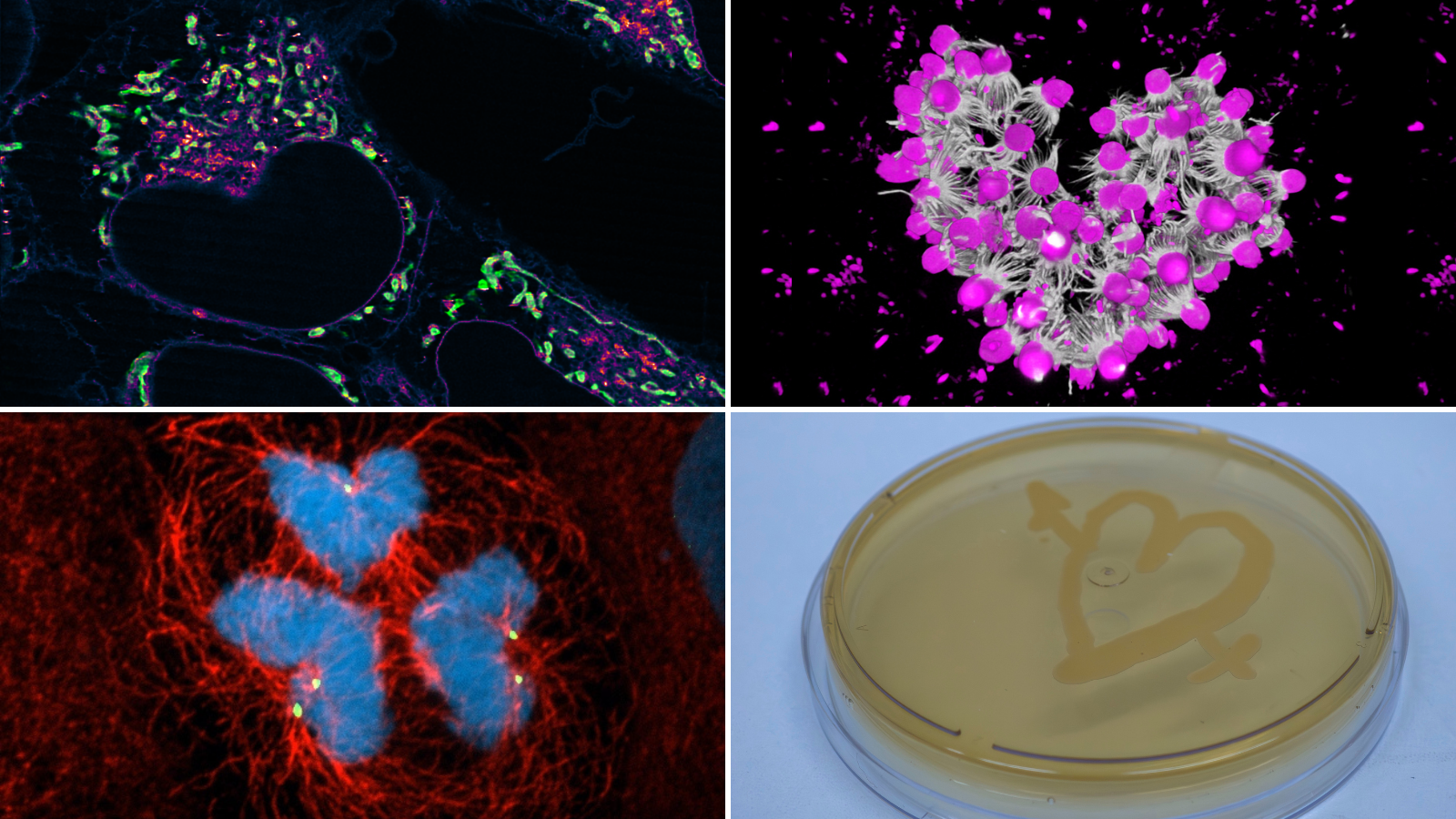
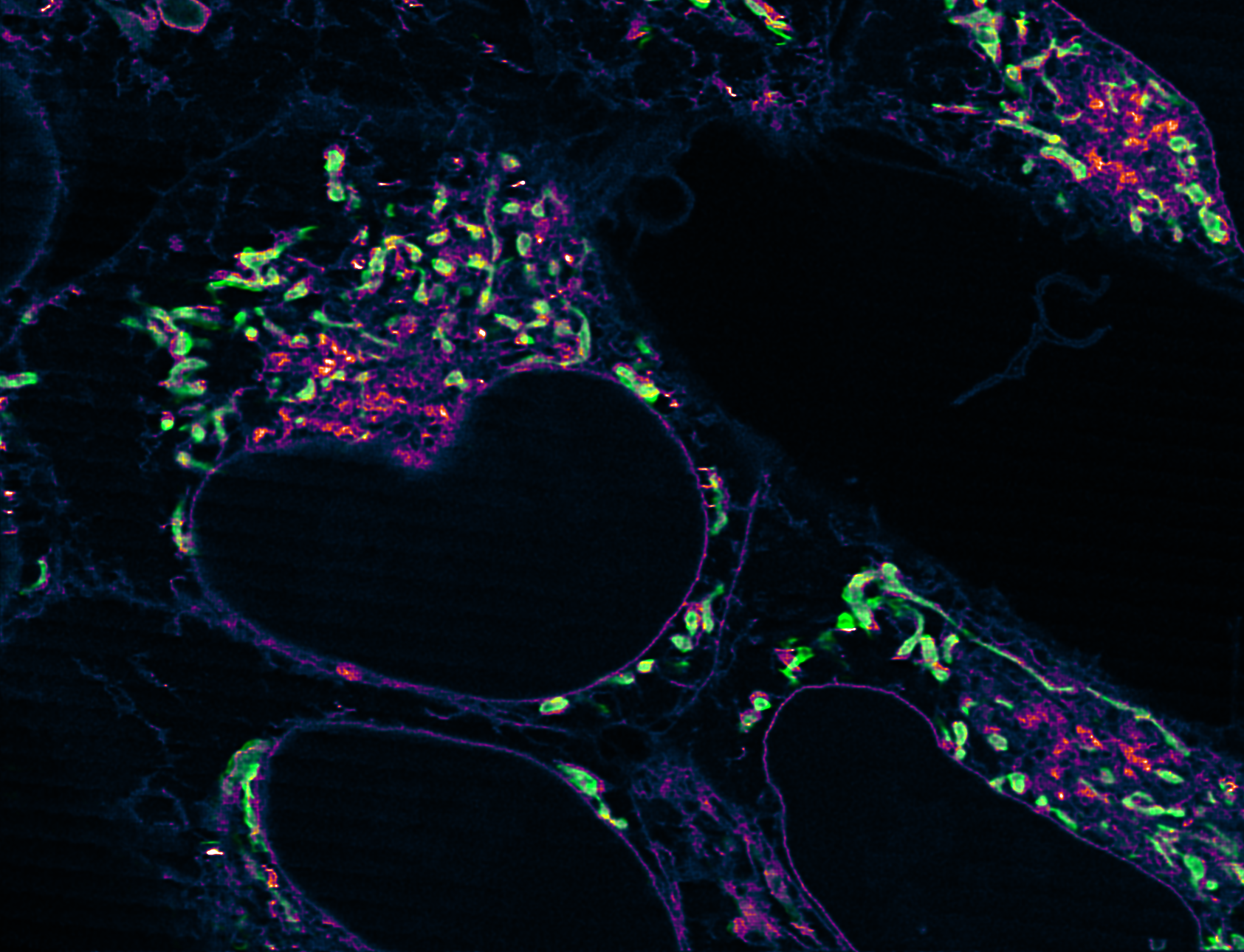
Kidney cells under the microscope.
The dark circles are the nuclei of each cell, and the fluorescent dots are mitochondria stained with a contrast substance. The heart-shaped nucleus belongs to a cell that is beginning to divide.
Photo: Marcela Díaz, Institut Pasteur de Montevideo
-
This reconstruction, created from several microscope images, shows colonies formed by a single-celled microorganism. These images help researchers study the evolution of organisms toward more complex, multicellular forms of life.
Photo: Núria Rosi Rocher, Institut Pasteur de Paris

-
Cells in the middle of the division process. The red structures are microtubules, which act like strands that separate a cell’s DNA and ensure that each daughter cell receives an identical copy. These images are key to studying the cell cycle.
Photo: Rosa García, Institut Pasteur de Montevideo.

-
Colonies of Staphylococcus aureus growing on a culture plate.
This bacterium can cause a variety of illnesses, especially skin infections. In this experiment, its resistance to methicillin, a commonly used antibiotic, is being studied.
Photo: Caio Franco, Institut Pasteur de São Paulo.

This compilation was made possible thanks to the Pasteur Network, which brings together 32 Pasteur institutes across five continents and promotes scientific cooperation.
