
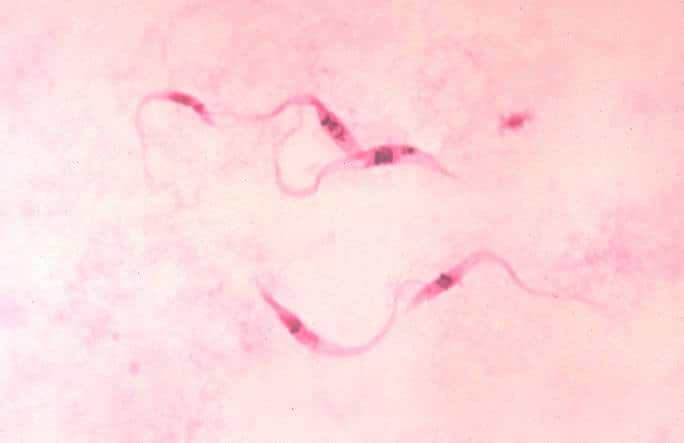
The study, published in the journal BMC Genomics, not only redefines how the organization of its genome is understood—since for years it was thought to be fragmented—but also provides clues about the parasite’s ability to adapt to the cells it infects, a feature that has historically made the disease difficult to control and treat.
T. cruzi primarily infects people through the vinchuca, an insect that deposits the parasite on the skin while feeding on blood. Once it enters the body—through a wound, the eyes, or the mouth—it invades different types of cells, especially those in the heart, muscles, and digestive system. Inside the host, it multiplies and can remain hidden for long periods, changing form and evading the immune system’s response. This ability to transform, adapt, and persist for years is one of the reasons Chagas disease can progress silently and become chronic.
Because of these characteristics, the genome of T. cruzi was considered for decades to be one of the most complex and difficult to study among parasites, due to the large number of repeated genes and the variability between different strains. This led to the idea that its genetic material was unstable and constantly reorganizing. However, the new study shows that, although there are highly variable regions, the overall architecture of the chromosomes is stable and conserved.
In the analyzed strain, scientists observed that all chromosomes are present in two copies—as occurs in most organisms—with one exception: a specific chromosome appears in four copies. This feature has also been observed in related parasites such as Leishmania, suggesting it may be an ancient evolutionary trait.
The study also made it possible to distinguish three major regions within the chromosomes: one containing genes essential for the parasite’s survival and highly similar across strains; another with gene families linked to infection and interaction with the immune system; and regions where genes change more rapidly, are duplicated, or become inactivated, contributing to genetic diversity.
A better understanding of genome organization, along with a complete chromosomal map, makes it possible to more precisely identify which genes are present in all strains and which ones vary. This information is key both for improving diagnostic tools and for advancing the development of new drugs and potential therapeutic targets to combat the disease.
Scientific article:
Greif G, Chiribao ML, Díaz-Viraqué F, Sanz-Rodríguez CE, Robello C. The complete genome of Trypanosoma cruzi reveals 32 chromosomes and three genomic compartments. BMC Genomics. 2026 Jan 8;27(1):159. doi: 10.1186/s12864-025-12482-0. PMID: 41501640; PMCID: PMC12879350.
