
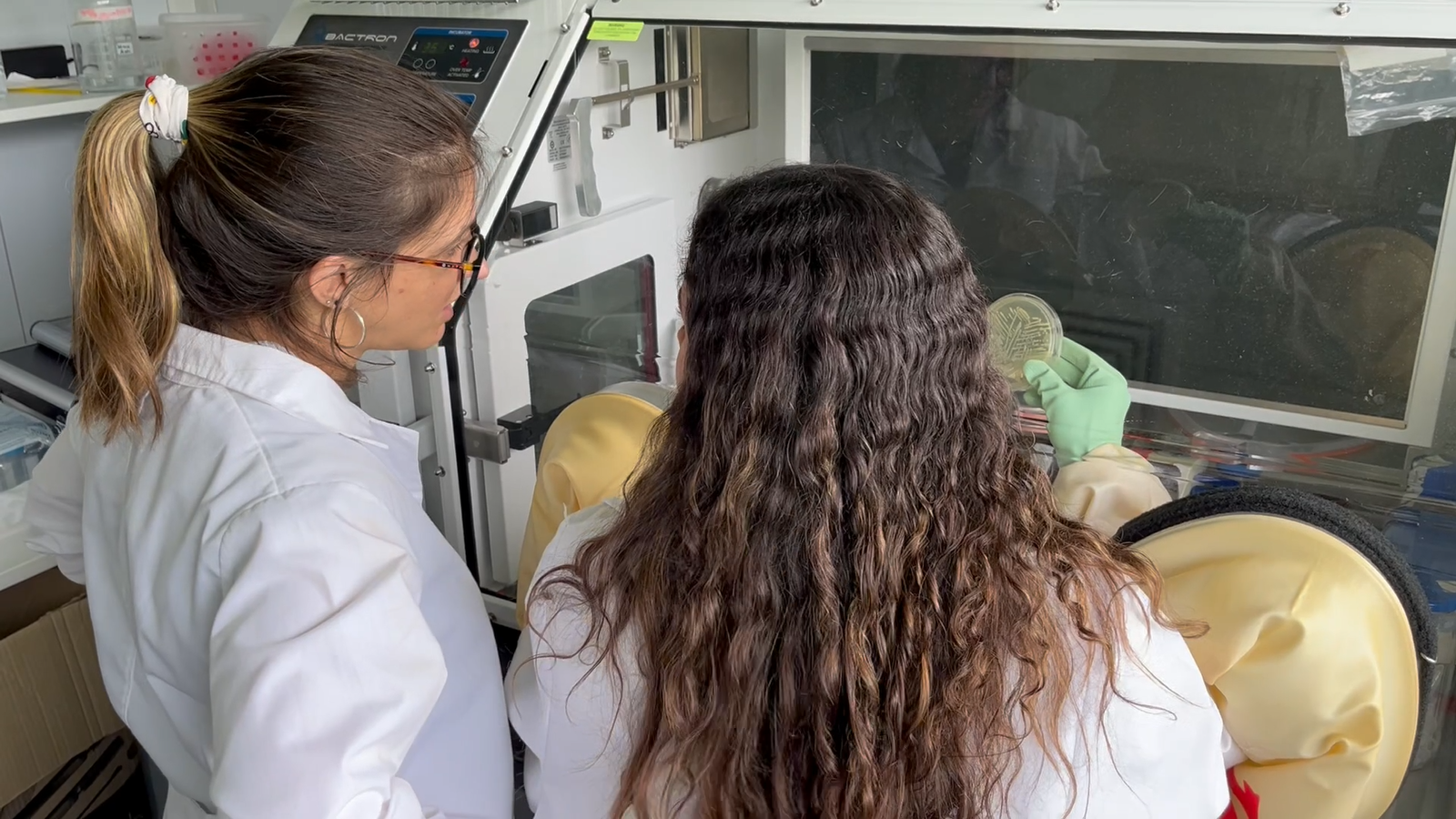
The study that observed these results, conducted by the Institut Pasteur of Montevideo together with the School of Nutrition at the University of the Republic (Udelar) and the Pereira Rossell Hospital Center, has provided new data that help better understand the relationship between the gut and autism spectrum disorder (ASD).
The research began in 2023 and aims to offer a preliminary perspective to further analyze and understand whether differences in the gut microbiota—the community of bacteria and other microorganisms that naturally inhabit each person’s intestines—could be a factor in treating or improving the quality of life of individuals with autism.
This year, the research team published an article in the journal Frontiers in Microbiomes, reporting that 93% of the children with ASD who participated in the study showed gastrointestinal symptoms that affect their quality of life. The bacteria analyzed were associated with these symptoms.
Children with autism in the study showed:
- A decrease in Faecalibacterium and Coprococcus, bacteria responsible for producing butyrate—a key acid for maintaining a healthy intestinal barrier and reducing inflammation. Their deficiency suggests a possible mechanism through which an imbalance in gut microbiota could influence neurodevelopmental pathways.
- A higher presence of Sellimonas, bacteria linked to disorders of the gut–brain axis.
- Many children with ASD use antipsychotic medications, which the study associated with a lower presence of Akkermansia, a bacterium linked to reduced intestinal irritation.
Overall, the study found notable differences in the composition of the gut microbiome of children with autism, opening the door to new research on the subject.
It also notes that pharmacological interventions may explain part of the variation in bacterial composition and should therefore be considered in clinical research.
The study was conducted on a sample of 50 Uruguayan children with autism and their siblings without the disorder. Stool and saliva samples were analyzed.
Its goal is to develop more precise tools for diagnosing autism. Currently, diagnosis is based on a clinical evaluation that considers behavior, development, and personal history, as there is still no specific medical test. Additionally, the study may provide useful information for designing diets better suited to the needs of patients with the disorder and for reducing gastrointestinal problems.
Scientific article:
Peñalba F, Guisande A, Lamberti L, Rusiñol C, Irastorza M, Konik F, Iglesias C, Mendive P, Garrido G, Parada A and Riera N (2026). Gut microbiota and its association with gastrointestinal symptoms and pharmacological treatments in a sibling-matched cohort with autism spectrum disorder. Frontiers in Microbiomes, 5:1777385. doi: 10.3389/frmbi.2026.1777385
