
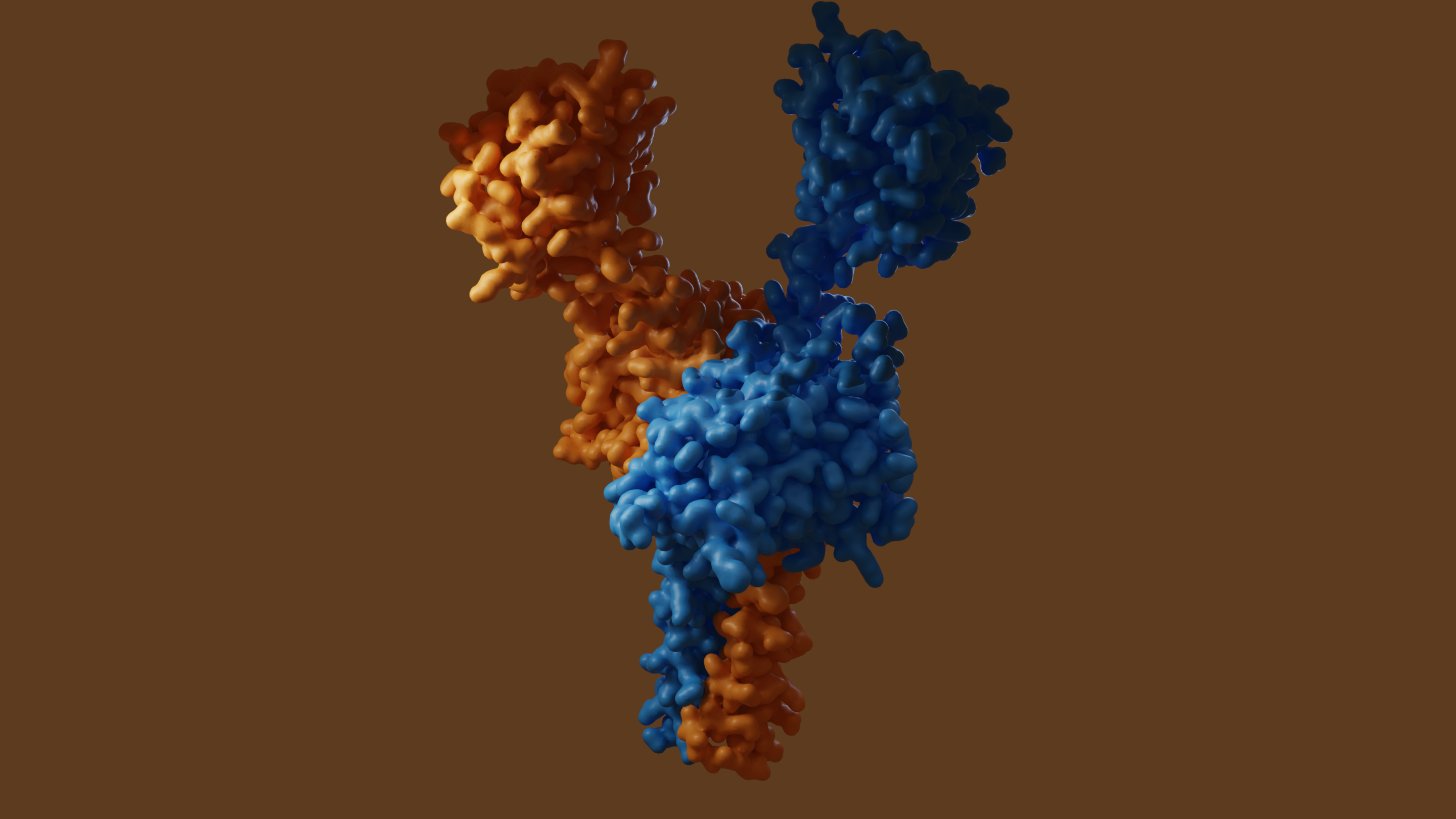
The study, published in the journal Nature Communications, opens new avenues for understanding how this bacterium causes disease. Leptospirosis is transmitted through contact with water or soil contaminated with the bacterium Leptospira. If not treated promptly with antibiotics, the infection can lead to organ failure. In urban settings, rats are a major source of transmission, while in rural areas other animals, such as cattle and sheep, can spread the disease through their urine.
Using advanced cryo-electron microscopy and X-ray crystallography techniques, the researchers were able to visualize the structure and behavior of a protein called LvrB, which acts as a “virulence switch” within Leptospira. These techniques make it possible to capture detailed images of proteins—tiny structures found inside bacterial cells—allowing scientists to observe them directly and understand how they function during infection.
The images revealed that, in its inactive state, LvrB has a symmetrical and rigid structure. When activated, that symmetry breaks down: some regions of the protein coil while others extend outward. Visualizing these structural changes enabled the researchers to understand how LvrB functions as a molecular switch, regulating the bacterium’s ability to cause disease.
The team also discovered that LvrB interacts with a partner protein, which they named LvrC, and that LvrC is modified when LvrB becomes activated. This modified form of LvrC triggers the changes that allow the bacterium to become pathogenic. In essence, the bacterium detects that it is infecting an animal—or a human—and adapts by producing virulence factors that enable it to establish infection. Without this molecular arsenal, the bacterium is eliminated by the host’s immune system before it can cause disease.
The discovery of the protein’s three-dimensional structure in both its “on” and “off” states could pave the way for the design of molecules capable of locking it in its inactive form, and potentially for the development of effective vaccines.
“During our research, a group from the University of Basel in Switzerland contacted us to share results they had obtained on LvrB, a topic they became interested in following an earlier publication from our group. It turned out that the different approaches—X-ray crystallography in Montevideo and cryo-electron microscopy in Basel—produced complementary findings that were essential for understanding what happens to LvrB when it becomes activated. Our discovery of LvrC, meanwhile, serves as the starting point for my ongoing doctoral research, which will continue to unravel how Leptospira causes disease,” said Joaquín Dalla Rizza, a researcher at the Structural and Molecular Microbiology Laboratory of the Institut Pasteur de Montevideo and one of the study’s authors.
Beyond its relevance to leptospirosis, these findings may also help scientists better understand similar mechanisms in other bacteria that infect humans, animals, and plants.
Access the article:
Agustoni, E.*, Mechaly, A.*, Dalla Rizza, J., Beriashvili, D., Pluhackova, K., Isaikina, P., Trajtenberg, F., Müntener, T., Wunder Jr, E.A., Ko, A.I., Schirmer, T., Buschiazzo, A.¶, & Hiller, S¶. Activation mechanism of the full-length histidine kinase LvrB from pathogenic Leptospira. Nat Commun (2026). https://doi.org/10.1038/s41467-026-71783-4
* Contributed equally to this work.
¶ Both authors are corresponding authors.
